Total Pageviews

Friday, 11 September 2015

Natural Forces Q & A

NATURAL FORCES
L- 16

Q.1. Name the following:
1. Other name of indirect charging method.
2. The process of transferring of charge from a charged body to the earth.
3. SI unit of electric charge.
4. The mutual push between the two bodies (not in contact with one another) away from one another.
5. The branch of science which deals with the study of earthquakes.
6. A body which does not have electric charge.
7. The device which works on transfer of charges.
8. A metallic conductor fixed on tall buildings, such that it conducts the atmospheric electricity into the earth.
9. The place and intensity of earthquake where recently it had occurred (2015).
10. Ordering or placing of different materials having affinity for electrons in a series.

Q.2 .Fill in the blanks: 
1.  An ebonite rod acquires a ………………charge when rubbed with a cat’s skin.
2. Opposite charges …………… each other.
3………………..measures and records the intensity of seismic waves.
4. The point on surface of earth where a seismic wave originates is called……..
5. Lightning …………..protects high buildings from the damage caused by lightning.
6. ……………………….is the innermost layer of earth.
7. ……………is the device used in detecting electric charges.
8. Lightning helps in ………..cycle occurring in nature.
9. Glass rod acquires……………charge when rubbed with silk cloth.
10. ………………is the method in which charging is done with touching the charged body to the object that has to be charged.

Q.3. Give reasons:
1. One should not take shelter under a tall tree during lightning.
2. Why lightning conductors are used?
3. Why lightning is often accompanied by thunder?
4. Why do we often feel electric shock on opening the door of our car / house or when we take off our sweaters at night.
5. Why is it dangerous to carry an umbrella during a thunderstorm?
6. Why tall buildings are mostly struck upon by lightning?


Tissues: Cells in Unison Q & A

TISSUES: CELLS IN UNISON
(LESSON – 3)

Q.1. Name the following:
1. Meristem located at root and shoot apex.
2. Supporting cells for neurons.
3. Two proteins of muscle cells.
4. An avascular tissue.
5. Animals which lack presence of tissues and organ systems
6. Cells which do not undergo replacement or repair in human body after birth.
7. A protective tissue in plants which is dead.
8. Tissue which forms endoskeleton of the body.
9.  A living conductive tissue in plants.
10. Meristems found at the base of internodes.

Q.2. Fill in the blanks:
1. ………..is the unit of nervous tissue.
2. ………..carry messages towards cell.
3. Connective tissue with fluid matrix is …………….
4. Tissue that forms inner lining of mouth is ………………
5. ……connects muscles to bones.
6. ……………muscle control movement of urinary bladder, uterus.
7…………..is the gelatinous layer on which rests epithelial cells.
8. ……………..is an aggregation of cells that are similar in structure, functions or both.
9…………..are the tissues that stores fats.
10. Tissues that secrete number of important substances like hormones and enzymes………………….

Q.3. Give reasons:
1. Skeletal muscle is called as striated muscle.
2. Cardiac muscles are called as involuntary muscles.
3. Sclerenchyma cells are dead.
4. Muscles have the property to contract.
5. What is the need for cells and tissues specialisation?


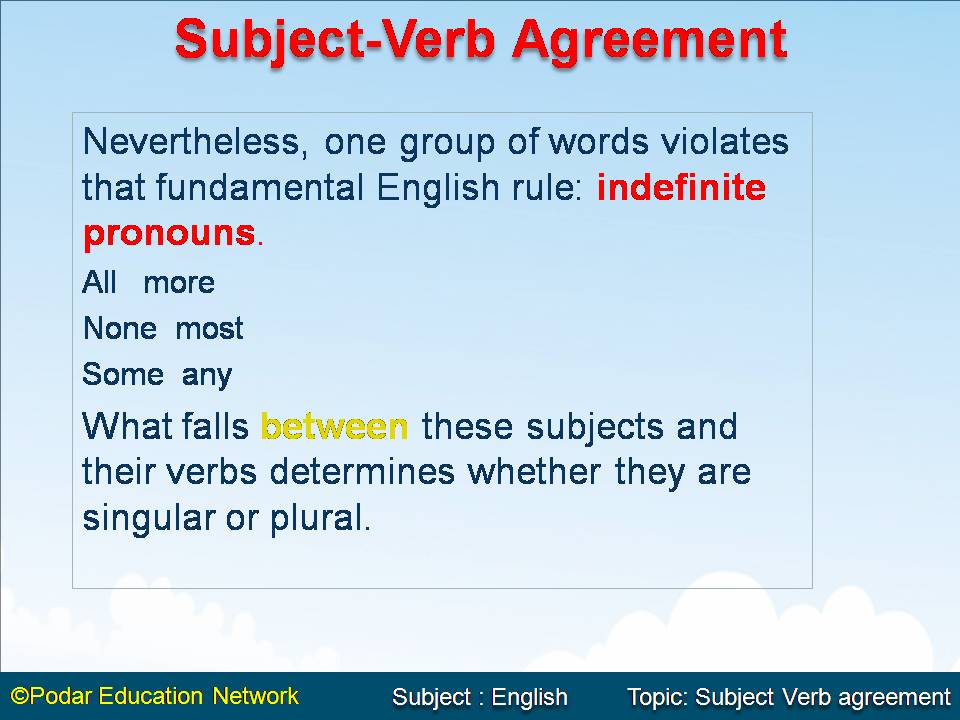
Subject Verb Agreement


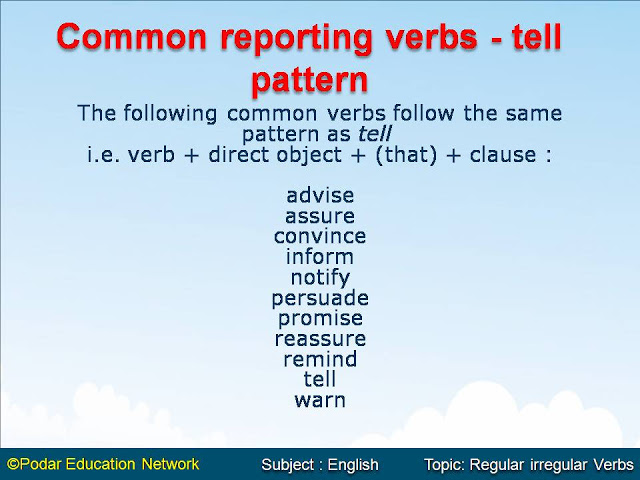
Reporting Verbs


Thursday, 10 September 2015

The Inch-cape Rock Questions and Answers

THE INCH CAPE ROCK
1.What does the poet want to convey in the first two stanzas?
In these stanzas the poet is describing the calmness of the sea. There is no stir in the air
and the sea also appears to be calm. The ship stood very still in the ocean, this we know
because the ‘keel’ of the ship is steady. On the other hand the Inchcape rock ahead
of the ship was also standing firm and the waves flowed steadily not affecting the
Inchcape rock.
2.What is the figure of speech used in these lines?
a)       “no stir in the air, no stir in the sea.”
b)       “So little they rose, so little they fell.”
Here at two places poet has used ‘repetition’, “no stir in the air, no stir in
the sea.” “So little they rose, so little they fell.” Also there is ‘alliteration’
in the lines, “The ship was still as till could be.”
3.Who anchored the bell and why it has been called as warning bell?
The bell was anchored by the kind Abbot(monk) of Aberbrothok  on the Inchcape rock.
 This bell worked as a warning bell for the mariners, whenever there happened
 to be a storm, the bell swayed and floated along with buoys producing
sound and mariners became aware about the presence of a dangerous rock,
 which would have otherwise been hidden by the swell of sea waves. All the
 mariners were thankful towards Abbot of Aberbrothok and blessed him for
his kind deed.
4.What is the figure of speech used in these lines?
a) The ship was as still as she could be ,her keel was steady
Her sails from heaven received no motion.
b) A sound as if with the inchcape bell
The devil below was ringing the bell
a)Personification
b)Metaphor
VERY SHORT QESTIONS
1.Do you think this poem is ballad? Why?
Yes,it is ballad because it is narrating a story of two characters .
2.What do you make out of the Abbot of Aberbrothok’s character?
He was a kind- hearted, humane person who wished well for everyone.
That is why he had placed the bell at the Inchcape Rock’s buoy.
3.Why did Sir Ralph want to create trouble for Abbot of Aberbrothok?
 …...because he was jealous of the popularity of Abbot of Aberbrothok and
 simply wanted to make life difficult for him.
4.What is the mood of the poem in the first few stanzas of the poem?
The mood is of happiness, stillness. It is peaceful and calm. The day is bright and sun is shining.
Everything looks just perfect.
5.Which rhyme scheme is followed in this poem?
……aabb.
6.What is the difference between a ‘surge’ and a ‘wave’?
 A surge is a very strong forward movement of sea
waves whereas wave is the regular movement of sea water.
7.What is the structure?
Poem has seventeen stanzas.
8.What is the form?
It is a lyrical ballad.
9.What is the style?
 It is narrative poem by the poet.
10.Are opening and closing lines of poem significant?
Yes, Opening lines tells that everything is peaceful and calm and closing lines
 talk about death and destruction.
11.Is there a clear passage of time mentioned in the poem?
No, the poem just describes the life of pirates and sailors at sea.
12.What is the mood of the poem?
 it is very serious and adventurous.
13.What is the tone of the poem?
Is it a satiric, serious ,adventurous and somber poem .
14.What is the theme?

One pays for ones misdeeds.

Saturday, 5 September 2015

Lost world Ch 4 & 5

RECAP Questions (only for reference)
Who is Ned Malone?
A journalist with a newspaper and a spurned lover.
Who is his lover?
Gladys
Why has Gladys spurned his proposal?
Ned was not an ideal man of her dreams. She wanted Ned to achieve something
great.
Who is Mc. Ardle?
The editor of the newspaper that Ned works at.
With what purpose does Ned approach Mc. Ardle?
To send him on a challenging assignment.
What is the challenging assignment given to Ned?
To interview Professor Challenger.
Extra questions of Chapter-4 and 5
1.What did Ned find when he went to his friend’s office on Wednesday?
He found a letter.
2.What does Professor Challenger find offensive in Ned’s letter?
The use of the word speculation with regards to the professor’s statement upon the
subject of Darwinism.
3.Who is Austin?
Probably an assistant or Professor Challenger’s servant.
4.What work is assigned to Austin?
To shield Professor Challenger from the journalists.
5.According to Professor Challenger what kind of people are journalists?
They are intrusive rascals.
6.Why did Ned gasp as he saw Professor Challenger?
Professor Challenger’s appearance made him gasp. His head was enormous. He
had the face and beard of an Assyrian bull. The eyes were blue-grey, very critical
and very masterful. A huge chest and two massive hands covered with long black
hair.
7.Why did Professor Challenger attack Ned?
He recognized that Ned was a journalist
8.Why didn’t Ned give in Professor Challenger to the policeman?
Ned was to blame himself. He had intruded upon Professor Challenger inspite of
the fair warning given to him.
9.Why did Ned return to Professor Challenger’s room?
Because he felt that the fault of the incident lay with him.
10.What were the contents in the dead man’s knapsack/backpack?
Scraps of verse, pictures of sceneries, a paint box, a box of coloured chalk, a few
paint brushes and a cheap revolver.
11.From the above contents what was evident?
That  the man was an artist or a poet.
12.Who were the Indians with whom Professor Challenger spent the night in an Indian village
in South America?
Cucama Indians.
13.Describe the strange creature sketched by the artist?
It’s head was like that of a fowl, the body of a bloated lizard, the trailing tail was
furnished with upward-turned spikes and the curved back was edged with a high
serrated fringe.
14.How does Professor Challenger’s convince Ned of the existence of the creature?
The professor shows Ned a monograph by his friend Ray Lancaster. In the
reconstructed animal of a dead world there was a great resemblance to the
sketch of the unknown artist.
15.What did Professor Challenger finally hand over to Ned?
The upper portion of the wing of a large bat.
16.Why did the picture that Professor Challenger showed Ned have an unsatisfactory
appearance?
Because when the Professor and the Indian guide descended into the river, the
boat was upset and the case which contained the undeveloped films was broken
and ruined beyond repair.
17.To which creature did it actually belong?
The dimorphodon or pterodactyl, a flying reptile of the Jurassic period.